
Côtes de Provence · Coteaux Varois en Provence
Terroir
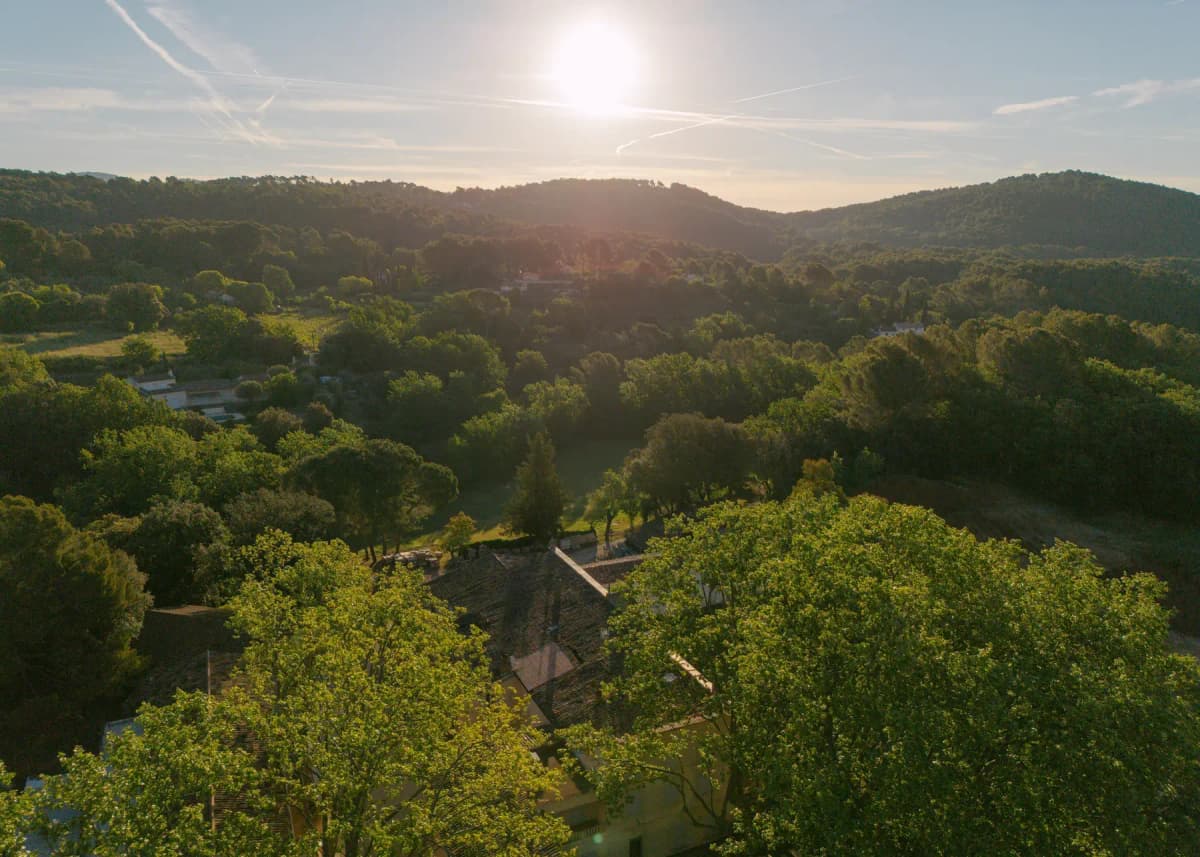
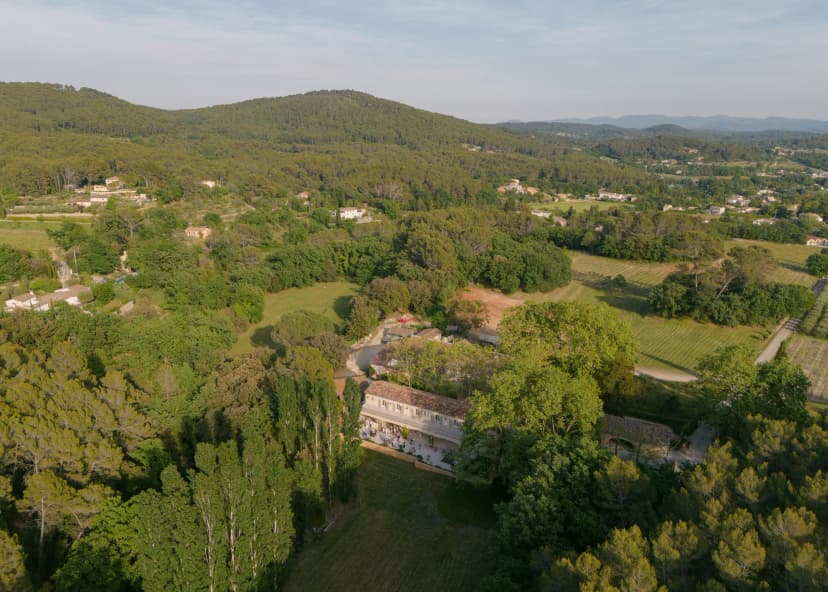
Twenty-two hectares between Flayosc, Salernes and Carcés — where limestone, light and patience become wine.
Terroir, for us, is not a single place. It is the conversation between three landscapes, a Mediterranean sky and the hands that work beneath it — and every vintage records one year of it.
Three sites, three characters
Our vines grow on three distinct sites in the Var, and each brings its own voice to the cellar: the marls of Carcés, the terraced plateau of Salernes and the stony slopes around the château in Flayosc. Select a site to explore its parcels, soils and grape varieties.
Sun, stone and mistral
Provence gives us close to 2,800 hours of sunshine a year. The vines ripen slowly and evenly, while the cool nights of the inland hills preserve acidity and aromatic freshness.
The mistral is our quiet ally: it dries the leaves after rain and keeps the fruit healthy with very little intervention — one reason we can work as gently as we do.
Limestone at heart
Beneath all three sites runs the same Provençal backbone of limestone — read differently in each place: as Triassic marl in Carcés, as red clay over lacustrine limestone in Salernes, and as stony Jurassic slopes in Flayosc.
Carcés
Triassic marls and clays with limestone seams prone to seasonal movement
Salernes
Red ferruginous clays over lacustrine limestone with sandy pockets
Flayosc
Stony Jurassic limestone slopes with clay-rich colluvium
Savoir-faire, shared
A small local team carries this estate through the year — many have been with us since the first harvest. Together with our winemaker, the family is involved in every decision, from winter pruning to the final blend.
Most of the work here is still done by hand: every vine is pruned, tended and picked individually. This savoir-faire, passed on from season to season, is the quiet craft behind each bottle.
An old place, a young dream
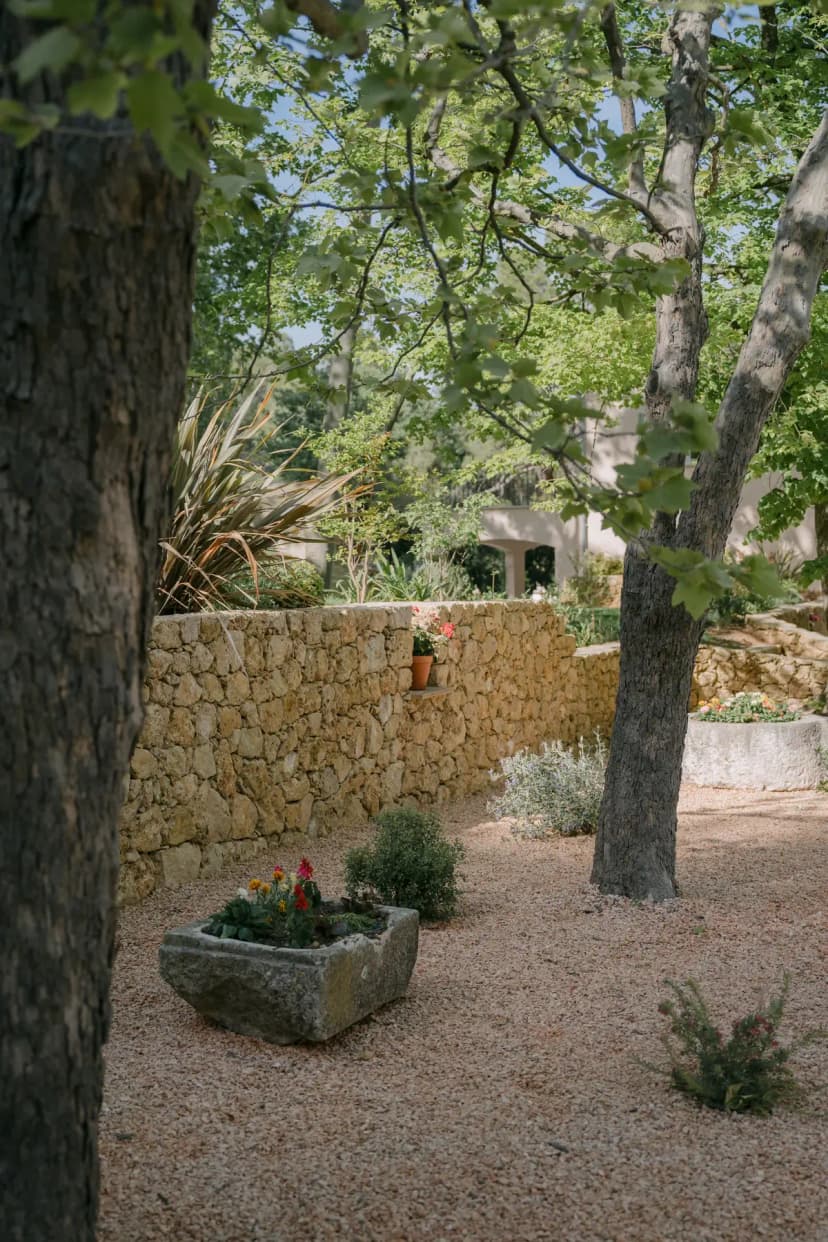
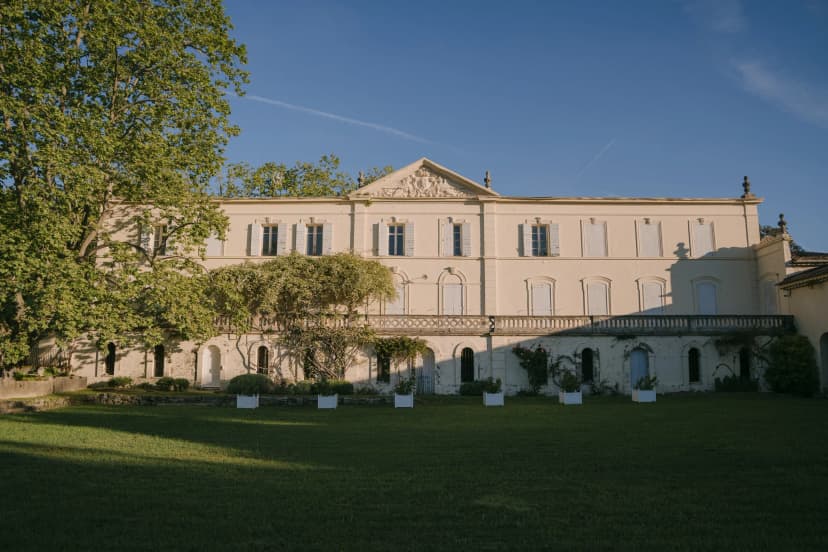
The château and its plane trees have watched over this corner of the Var for generations. When our family arrived in 2018, we found old vines with deep roots — and a building full of stories waiting to be restored.
Step by step the estate has come back to life: the careful restoration of the old walls, young vines planted beside the old stocks, and two further vineyards in Côtes de Provence and Coteaux Varois that joined the family along the way.